
Benefits of Barefoot: Why Natural Hoof Function Matters
When people hear the term barefoot horse, many picture a retired pasture horse wandering comfortably without shoes. In reality, successful barefoot management is a comprehensive approach to supporting healthy hoof function through thoughtful trimming, balanced nutrition, appropriate movement, and management that supports healthy hoof development.
Rather than relying on an external structure to protect the hoof, barefoot management focuses on developing the hoof's own ability to withstand wear, absorb concussion, provide traction, and adapt to the environment. Understanding how the hoof is designed to function helps explain why so many owners, riders, and hoof care professionals are drawn to this approach.
Barefoot isn't a quick fix, and simply removing shoes doesn't create healthy feet. Every horse is an individual, but when the whole horse is supported, barefoot management can offer meaningful, well-documented benefits for hoof health, movement, and long-term soundness.
Why Horses Began Wearing Shoes: A Brief History of Hoof Care
For centuries, horses were essential for transportation, agriculture, industry, and the military. Many worked long hours over abrasive roads while carrying heavy loads, often with little opportunity for rest. Under these demanding conditions, horseshoes offered a practical solution to reduce excessive hoof wear and help horses continue performing the jobs they were asked to do.
As horses became increasingly important to daily life, shoeing gradually became the accepted standard for hoof care. For generations, it was widely viewed as the best way to protect working horses, and that tradition continued even as the role of the horse began to change.
Over the past several decades, advances in equine anatomy, biomechanics, and hoof physiology have transformed our understanding of the hoof. Rather than viewing it simply as a structure that needs protection from wear, we now recognize it as a dynamic, living organ that adapts to its environment and plays an active role in shock absorption, circulation, balance, and movement.
This growing body of knowledge has encouraged many horse owners and hoof care professionals to explore management practices that support the hoof's natural function and long-term development.
A Hoof Designed to Function
The equine hoof is an extraordinary structure designed to expand, flex, and absorb impact with every step. Healthy hooves help dissipate concussion, support efficient movement, and protect the structures within the foot and limb.
Rather than acting as a rigid block, a healthy hoof is designed to deform slightly under load before returning to its original shape as the horse lifts the foot. This natural movement (often referred to as the hoof mechanism) is central to how the hoof manages the tremendous forces generated during locomotion.
When the hoof is balanced and functioning well, the frog, digital cushion, lateral cartilages, sole, and hoof wall all work together as an integrated system. Each step helps distribute forces throughout the foot rather than concentrating them in a single area.
Improved Circulation
Every step a horse takes contributes to healthy circulation within the foot.
As the hoof loads under the horse's weight, it naturally expands, compressing and decompressing the vascular structures within the foot. As the foot is lifted, the hoof returns toward its resting shape. This continuous cycle of loading and unloading helps move blood through the hoof, delivering oxygen and nutrients to living tissues while assisting venous return from the foot.
Because the hoof is designed to flex with each step, preserving this natural expansion and contraction allows the hoof mechanism to function as efficiently as possible. Research has shown that attaching a rigid shoe to the hoof wall can reduce the amount of hoof capsule deformation during loading, which may limit some aspects of this natural circulatory mechanism.
Healthy circulation supports:
Healthy hoof growth
Strong internal tissues
Efficient nutrient and oxygen delivery
Removal of metabolic waste products
Recovery from everyday wear
Movement is essential to this process. Every comfortable step encourages healthy hoof function, making regular movement one of the most important contributors to long-term hoof health.
Seeing Is Believing
Real Horses. Real Results.
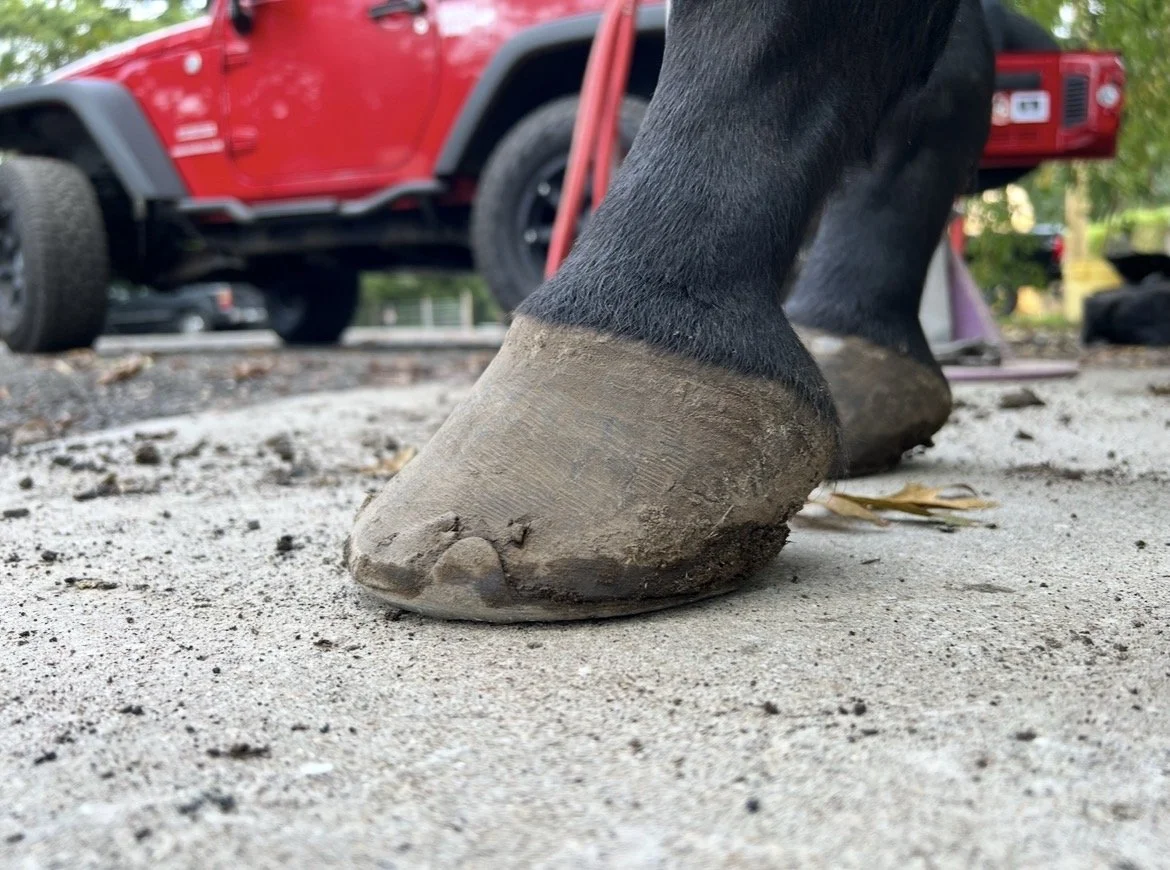
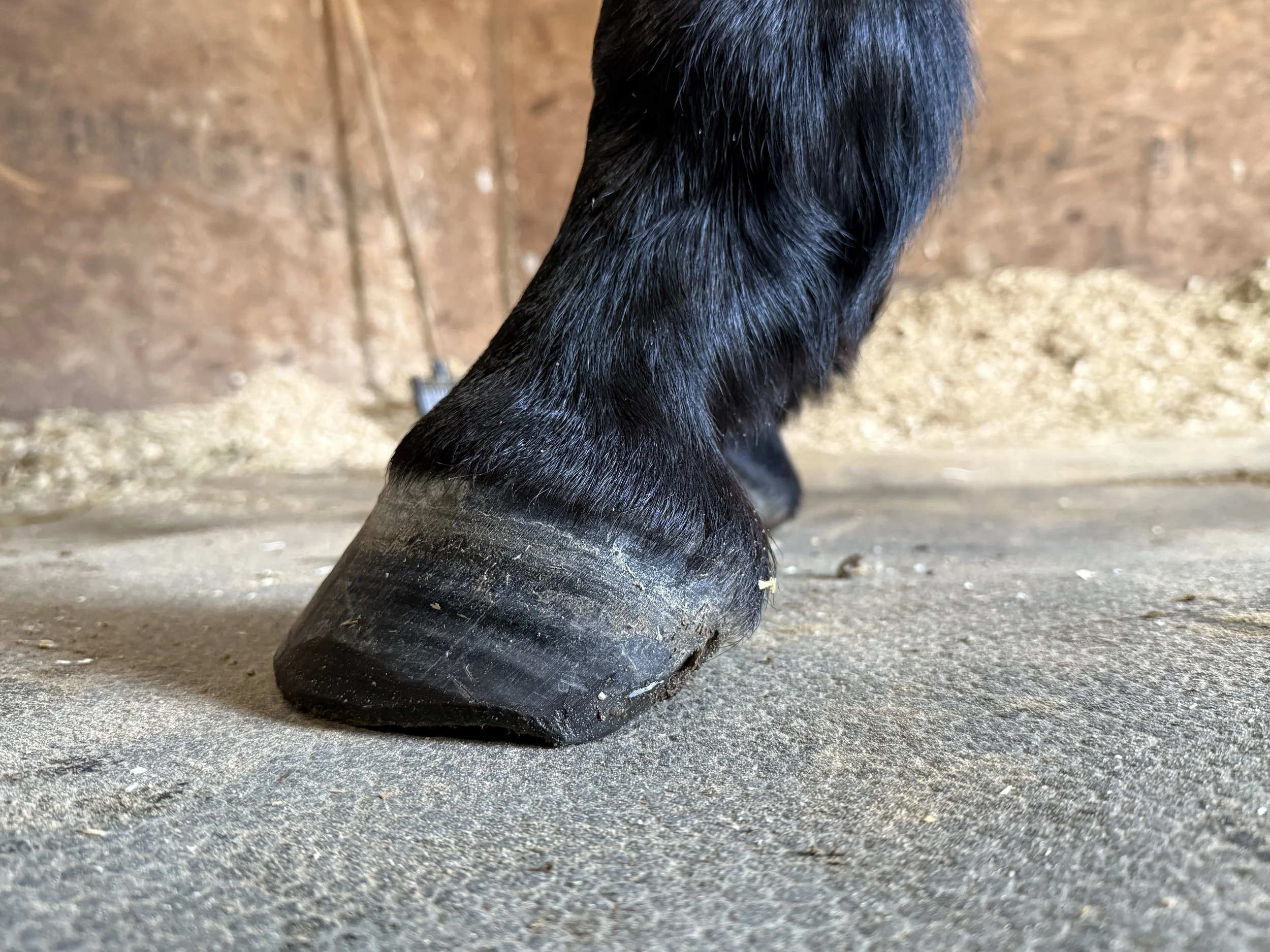
Pilot
My own OTTB, Pilot was shod as a yearling and raced until age four. I pulled his shoes at five, and over time, we’ve seen incredible changes: his digital cushion strengthened, his hairline leveled, and his bony alignment now reflects a much healthier foundation.
of racehorses in the United States are shod. Barefoot racehorses remain extremely uncommon due to industry norms and track regulations.
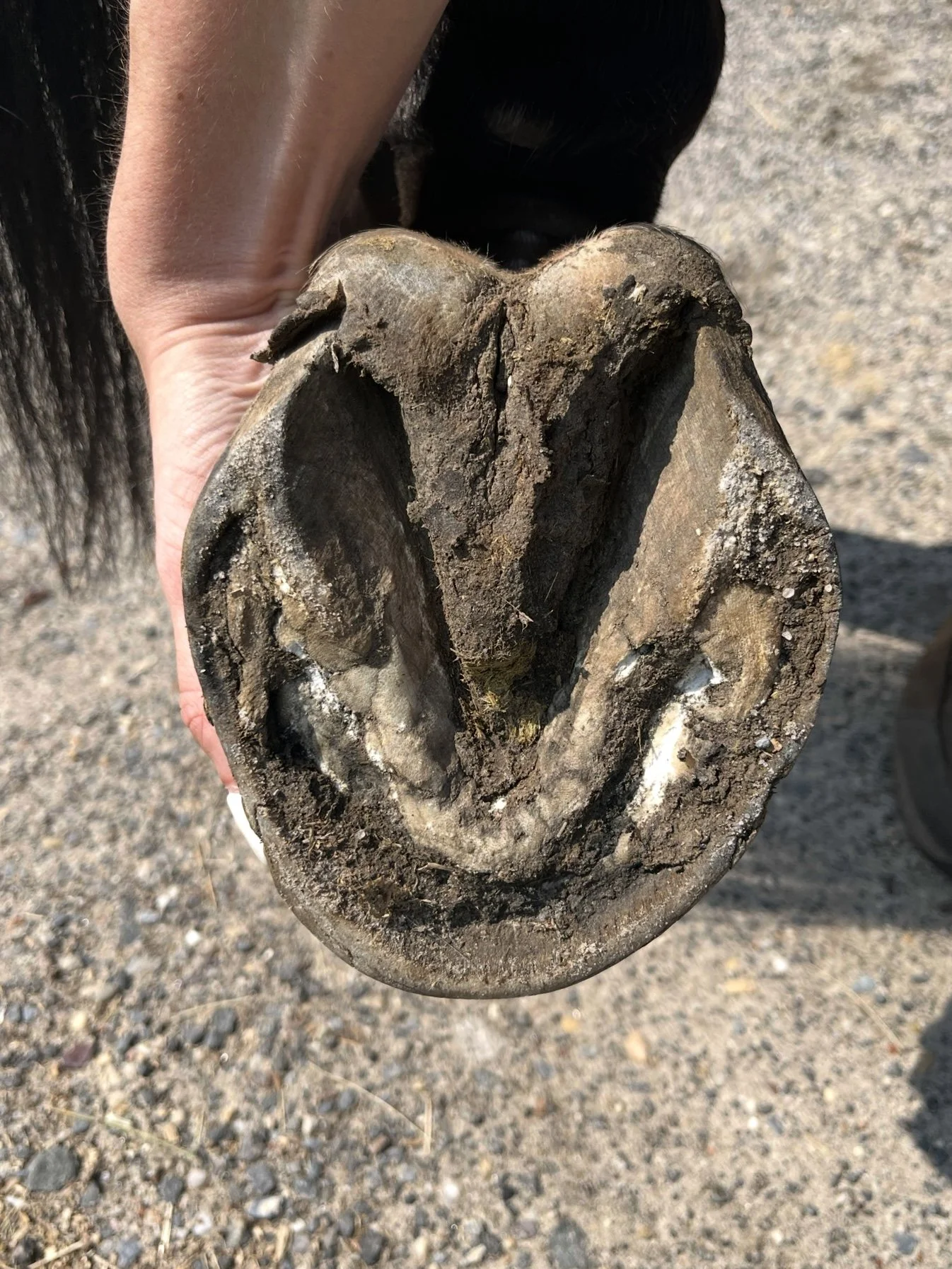
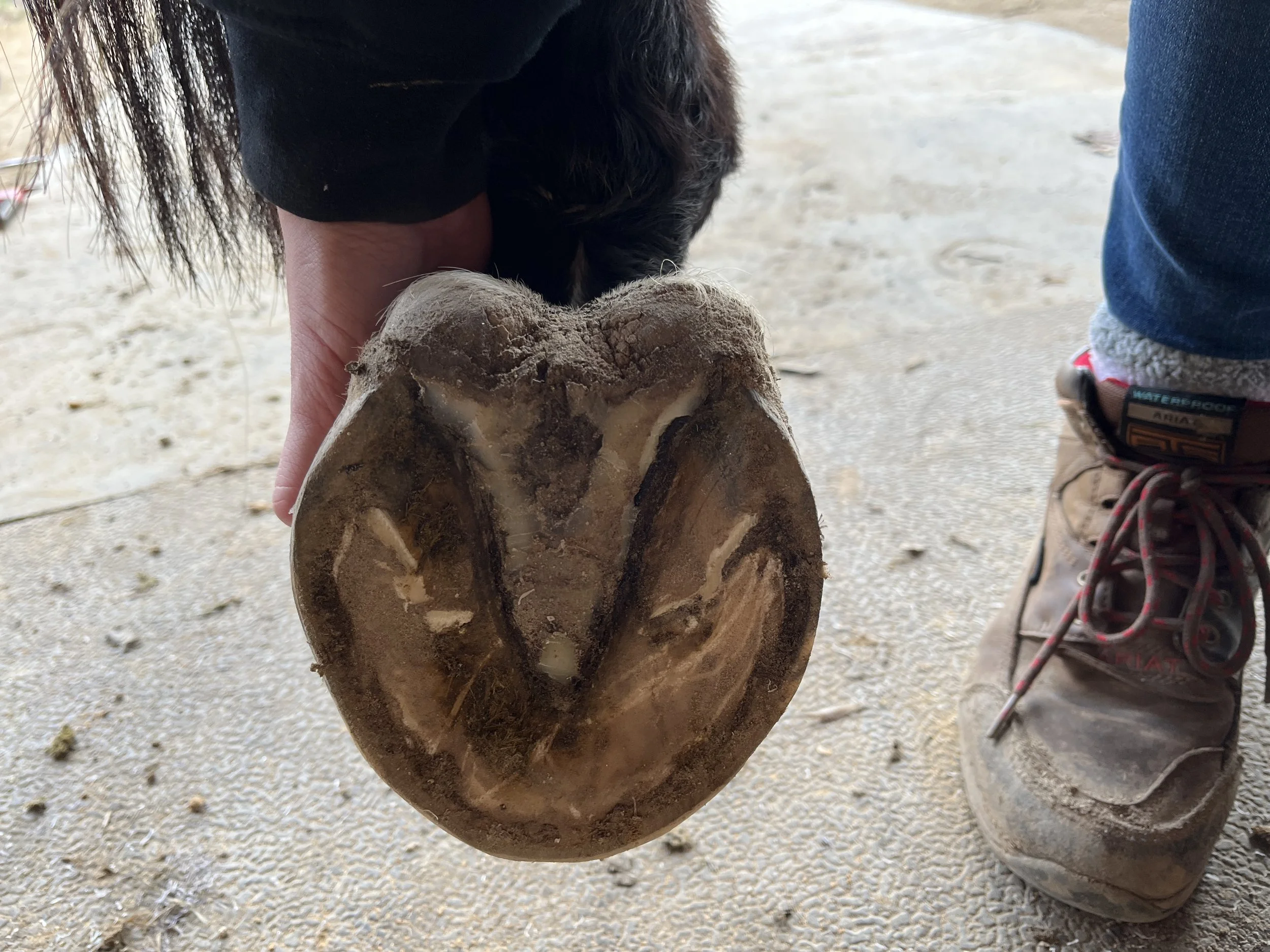
Goose
When I began trimming Goose at age three, his feet showed signs of neglect — overgrown bars and retained sole made his hooves look flat and cramped. With consistent trims, his heels have decontracted beautifully and his sole depth has greatly improved.
of shod horses had contracted heels in their front limbs. In contrast, 47–54% of barefoot horses exhibited contracted heels in the front limbs.

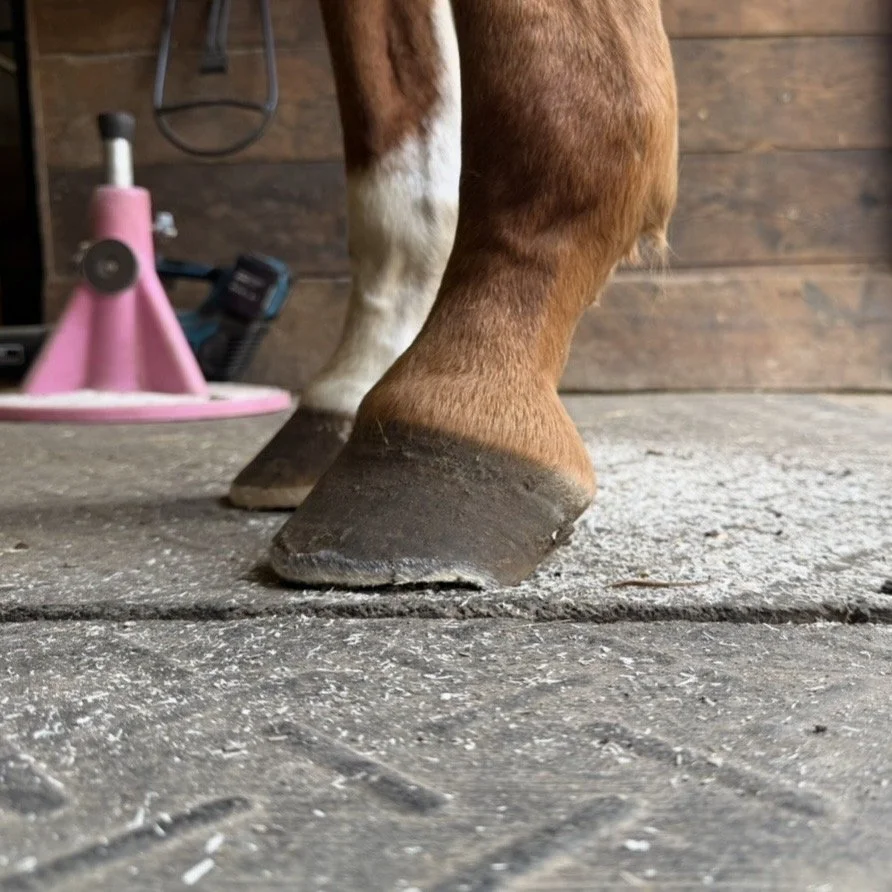
Bird
Bird came in with a forward-distorted hoof capsule and long toe that disrupted his limb alignment. With careful trimming, we’ve brought the toe back, improved his hoof-pastern axis, and tightened up the overall structure. He’s now standing on a hoof that’s working with him — not against him.
of non-lame athletic horses exhibit underrun heels, making it one of the most common hoof imbalances.

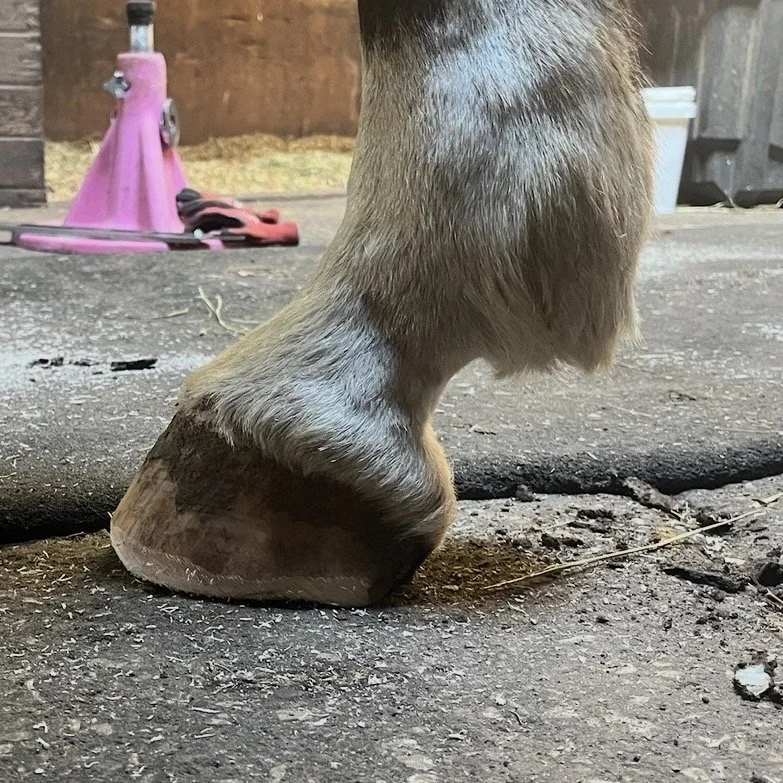
Max
Max’s hoof showed a broken-forward hoof-pastern axis, with an upright capsule disrupting the alignment of the lower limb. With consistent, progressive trimming, his hoof has developed toward a more balanced angle and improved hoof-pastern alignment.
of change at the heel can produce approximately 1° of change at the coffin joint, showing just how directly hoof balance can influence the structures above it.

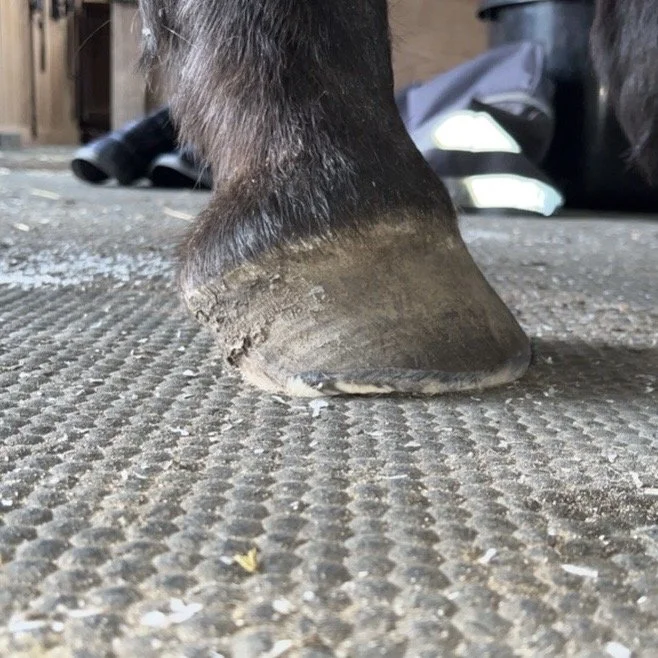
Willow
When she came in, her hoof capsule showed clear forward distortion, with a stretched toe and compromised alignment affecting how she loaded the limb. Through careful trimming, we’ve brought the toe back, improved her hoof-pastern axis, and restored a stronger, more balanced foundation.
of horses evaluated in a large-scale study had at least one hoof disorder identified during a routine farrier visit — imbalance, long toes, and underrun heels among the most common.
Stronger Hoof Quality
Healthy feet aren't created by trimming alone.
The hoof is a living, adaptable structure that is constantly responding to the environment around it. Consistent movement, balanced nutrition, appropriate footing, and thoughtful management all influence the quality of the hoof capsule as new hoof grows from the coronary band.
When these needs are met, many horses gradually develop:
Stronger hoof walls
Thicker, more resilient soles
Healthier frogs
Improved heel development
Better hoof balance
Reduced flaring and distortion
These changes don't happen overnight. Because the hoof grows continuously, meaningful improvements take time and are the result of consistent management rather than any single trim. Each new growth cycle reflects the conditions the horse has experienced, making long-term hoof health a product of everyday care.
Better Balance and Body Awareness
The equine hoof is richly supplied with sensory receptors that continually gather information about the ground beneath the horse. This sensory feedback, known as proprioception, allows the horse to recognize the position of its limbs, adjust its balance, and adapt its movement with every step.
A healthy, barefoot hoof can interact directly with the ground, providing continuous feedback on changes in terrain, footing, and loading. This information helps the horse make countless small adjustments in posture, stride, and limb placement without conscious thought.
Because the hoof is part of the horse's sensory system, maintaining healthy hoof function supports not just the foot itself—it also contributes to balance, coordination, confidence, and efficient movement throughout the entire body.
As research into hoof biomechanics and sensory function continues to evolve, growing evidence suggests that preserving the hoof's natural mechanics plays an important role in supporting the horse's ability to move comfortably and efficiently.
Supporting Healthy Internal Structures
Some of the hoof's most important structures are beneath and within the hoof capsule, working together every time the horse takes a step. These tissues aren't static—they respond to consistent movement, appropriate loading, and a healthy environment throughout the horse's life.
Regular movement over varied, comfortable terrain helps stimulate the development and maintenance of key structures, including the:
Digital cushion – a fibro-fatty structure that helps absorb concussion and support healthy circulation within the foot.
Lateral cartilages – flexible cartilage that assists with hoof expansion, shock absorption, and the hoof's natural loading mechanics.
Frog – an important weight-bearing structure that contributes to traction, shock absorption, and healthy hoof function.
Sole – the hoof's natural protective layer, which becomes stronger and more resilient as it adapts to appropriate stimulation.
...and many other interconnected structures that work together to support the health and function of the equine foot.
Together, these structures form an integrated system that helps the hoof absorb impact, maintain stability, support circulation, and protect the sensitive tissues within the foot. When the hoof is encouraged to function naturally through thoughtful trimming, balanced nutrition, and consistent movement, these internal structures are able to develop the strength and resilience needed for long-term soundness.
Healthy Hooves Start with Sound Management
Healthy hooves are built through the horse's everyday life—not just during a trim appointment.
While regular trimming plays an important role in maintaining balance and guiding healthy growth, the hoof is constantly responding to the environment it's exposed to. Every step the horse takes, every meal it eats, and every hour it spends moving or standing influences the way its feet develop.
Healthy hooves thrive when horses:
Move freely throughout the day.
Live in environments that encourage movement and allow them to express natural behaviors.
Have access to varied, appropriate footing.
Eat a balanced, species-appropriate diet.
Receive regular trimming and routine hoof care.
Have management tailored to their individual needs.
The trim is only one piece of the puzzle. Long-term hoof health develops through thoughtful management that supports the horse's body as a whole. When nutrition, movement, environment, and hoof care work together, the hoof is able to grow stronger, healthier, and more functional over time.
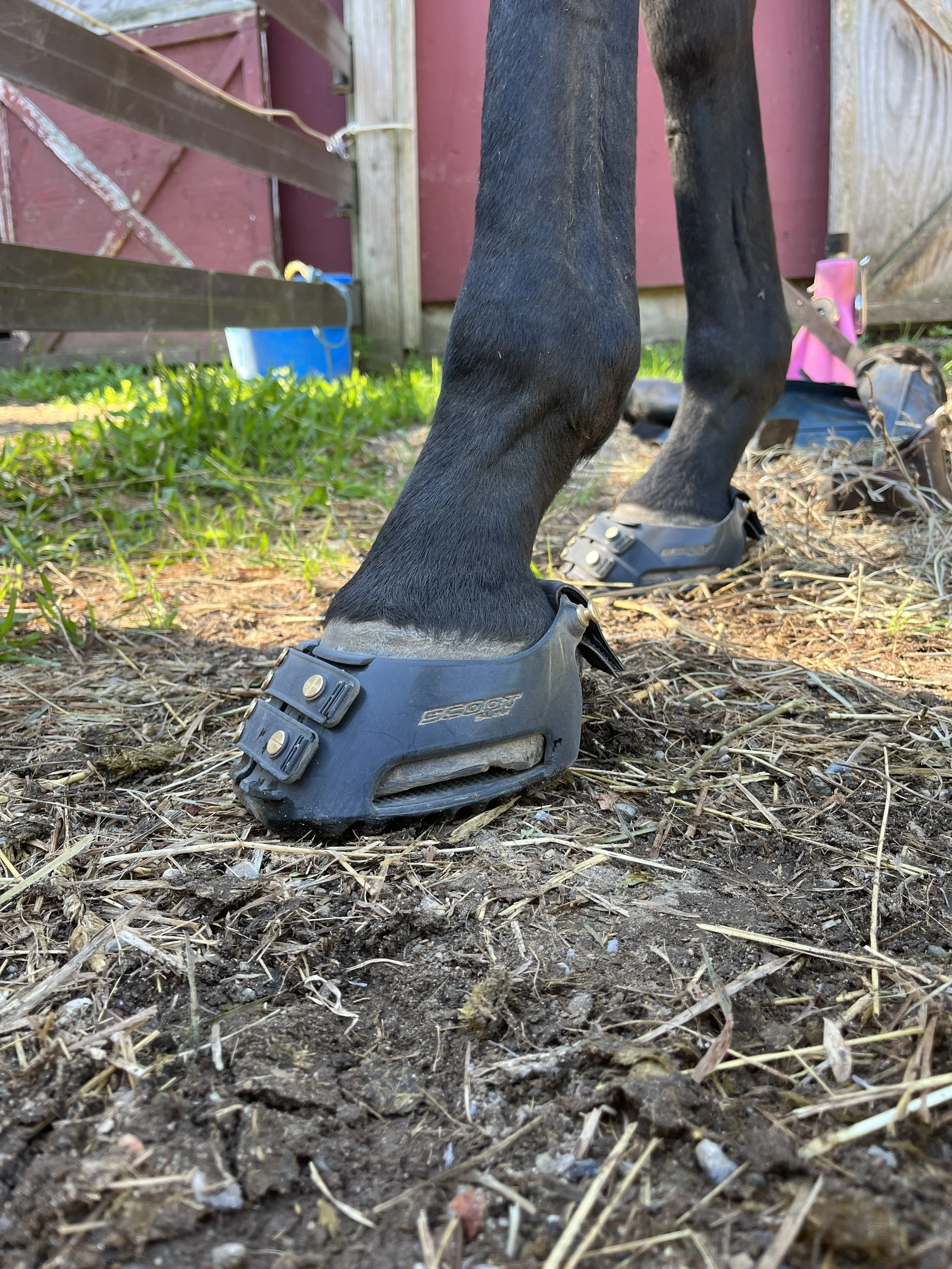
Comfort Always Comes First
A horse should never be expected to simply "tough it out."
As hooves grow stronger and healthier, there may be times when additional protection is appropriate for specific terrain, rehabilitation, or periods of increased sensitivity. Keeping horses comfortable while encouraging healthy hoof development allows them to continue moving, and movement is one of the greatest contributors to healthy feet.
Every horse deserves an individualized plan that prioritizes comfort while supporting long-term improvement.
Final Thoughts
At its core, barefoot management is about creating the conditions that allow the hoof to function as nature intended, through thoughtful trimming, balanced nutrition, consistent movement, and compassionate management.
The hoof is remarkably adaptable — capable of strengthening and supporting the horse throughout its life when given the opportunity to function naturally. Healthy feet aren't built overnight; they're developed through thousands of comfortable steps, sound management, and a commitment to supporting the whole horse.
When those pieces come together, many horses experience improvements not only in hoof quality, but also in comfort, movement, and long-term soundness.