From Six Quarts of Grain to Grain-Free
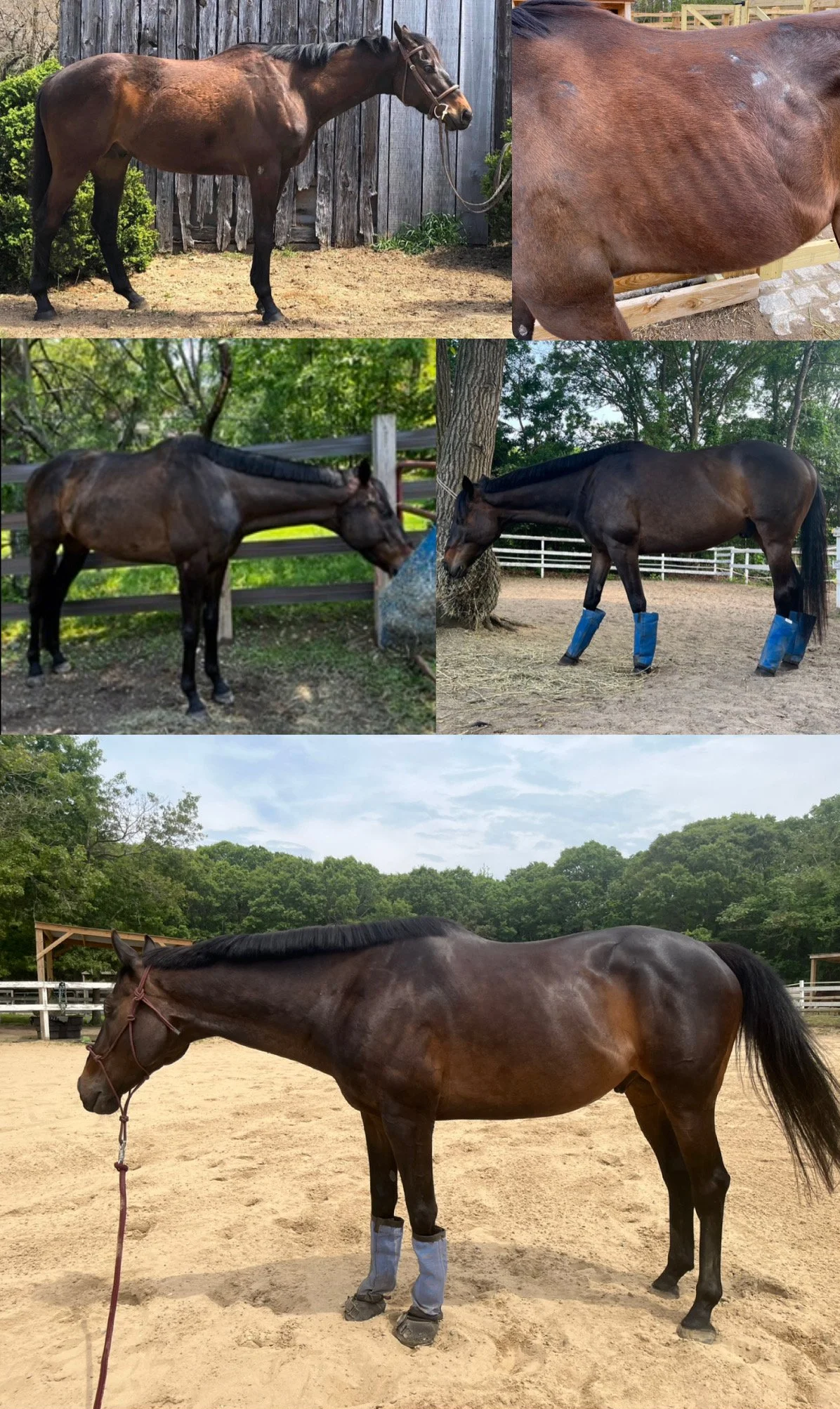
The horse in every one of these photos is Pilot.
The first photo is his sale photo from April 2020. The last is Pilot in 2026.
There are six years between them—and a lot of learning about equine nutrition.
His diet didn't become more complicated as I learned more. In many ways, it became simpler.
He went from eating six quarts of grain per day with rationed hay to eating no traditional grain at all, with free-choice forage and a diet built around filling specific nutritional needs.
This isn't a post about why every horse should be grain-free.
It's about something I wish I had understood much earlier:
More feed isn't necessarily better nutrition.
April 2020: The Sale Photo
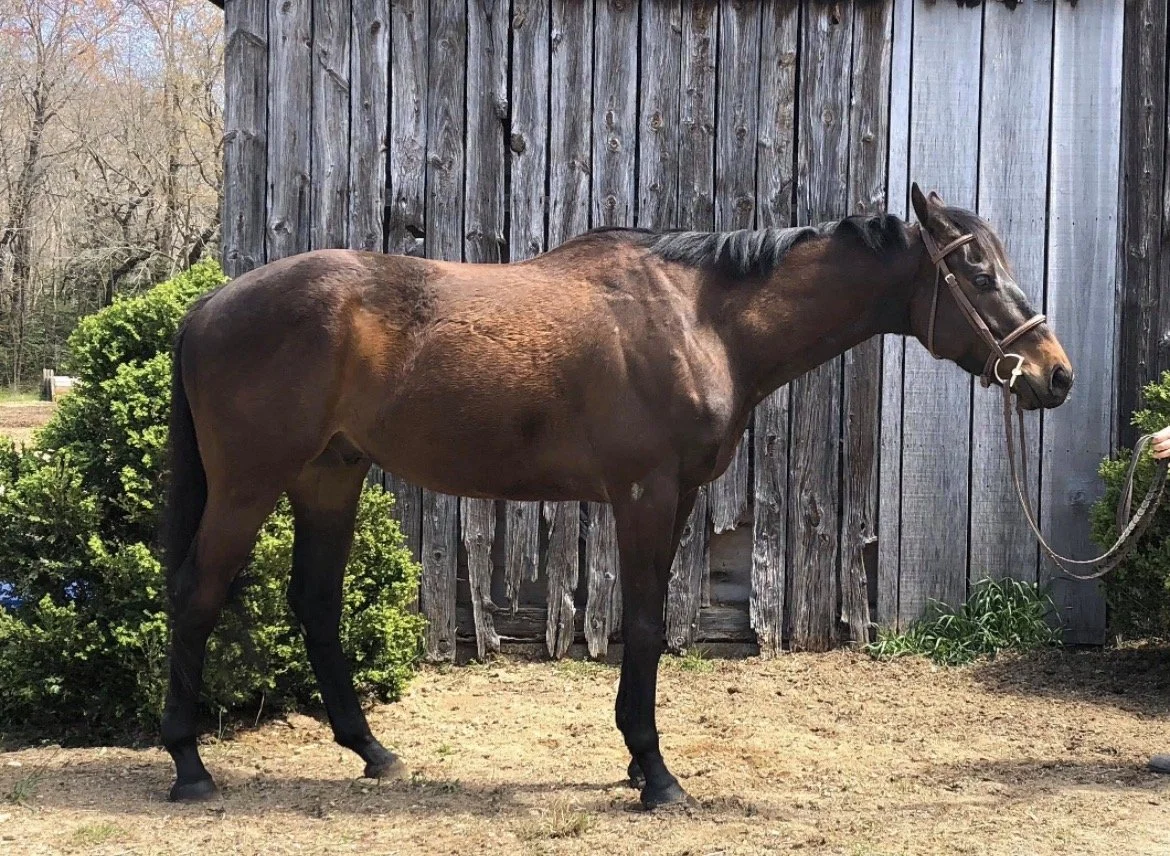
History: Unknown
This is the photo I first saw of Pilot.
I didn't know much about his previous diet, forage access, or management, so there isn't much we can fairly conclude about his nutrition from this photo alone.
And that's worth saying.
We can look at a horse's body condition and musculature and identify things we might want to investigate, but we can't reverse-engineer an entire diet from a photograph.
This was simply our starting point.
May 2020: Six Quarts of Grain a Day
When Pilot arrived, the immediate goal was pretty straightforward:
Put weight on him.
He was started on approximately six quarts of grain per day.
His hay was rationed, and at the time I didn't have control over how much hay was provided.
Looking back, this is probably the stage that best represents how I used to think about feeding horses.
Horse needs weight → feed more grain.
And six quarts certainly sounds like a lot of food. But volume alone tells us very little about whether a ration is actually meeting a horse's needs.
What feed was it?
What was its sugar and starch content?
Was the recommended feeding rate being met?
What did the entire diet provide for protein, amino acids, vitamins and minerals?
And perhaps most importantly:
Was he getting enough forage?
Those are the questions I would ask now.
At the time, I wasn't thinking about his diet that way yet.
2022: Starting to Look Beyond Grain
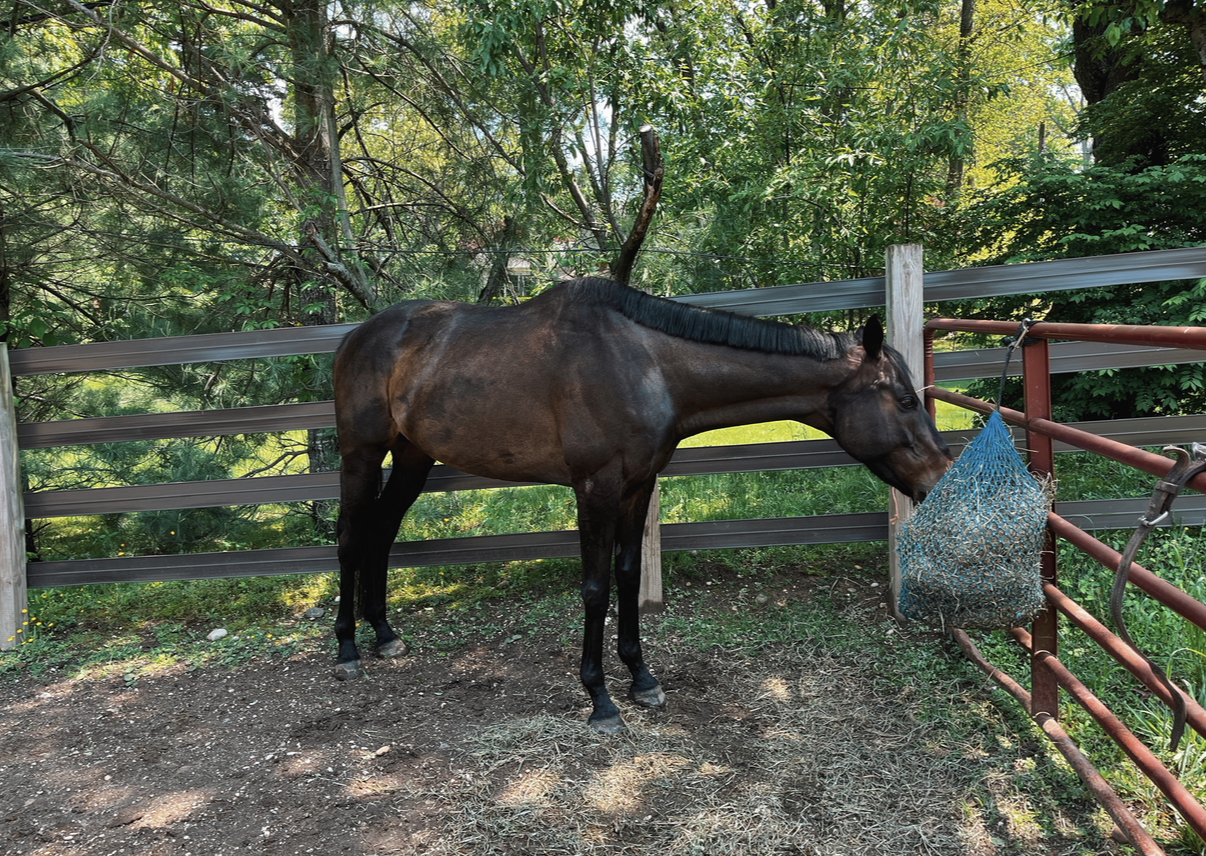
By 2022, Pilot's ration looked considerably different.
He was receiving approximately:
2 quarts grain
4 quarts alfalfa pellets
Vermont Blend
Approximately ½ bale of hay per day
This was the beginning of a shift in how I thought about feeding him.
Instead of relying so heavily on a commercial grain for calories, more of his diet was coming from forage-based sources. Alfalfa pellets provided another source of forage along with useful calories and protein, while Vermont Blend was being used to provide concentrated vitamins and minerals.
But there was still another major change coming.
2023: Going Completely Grain-Free
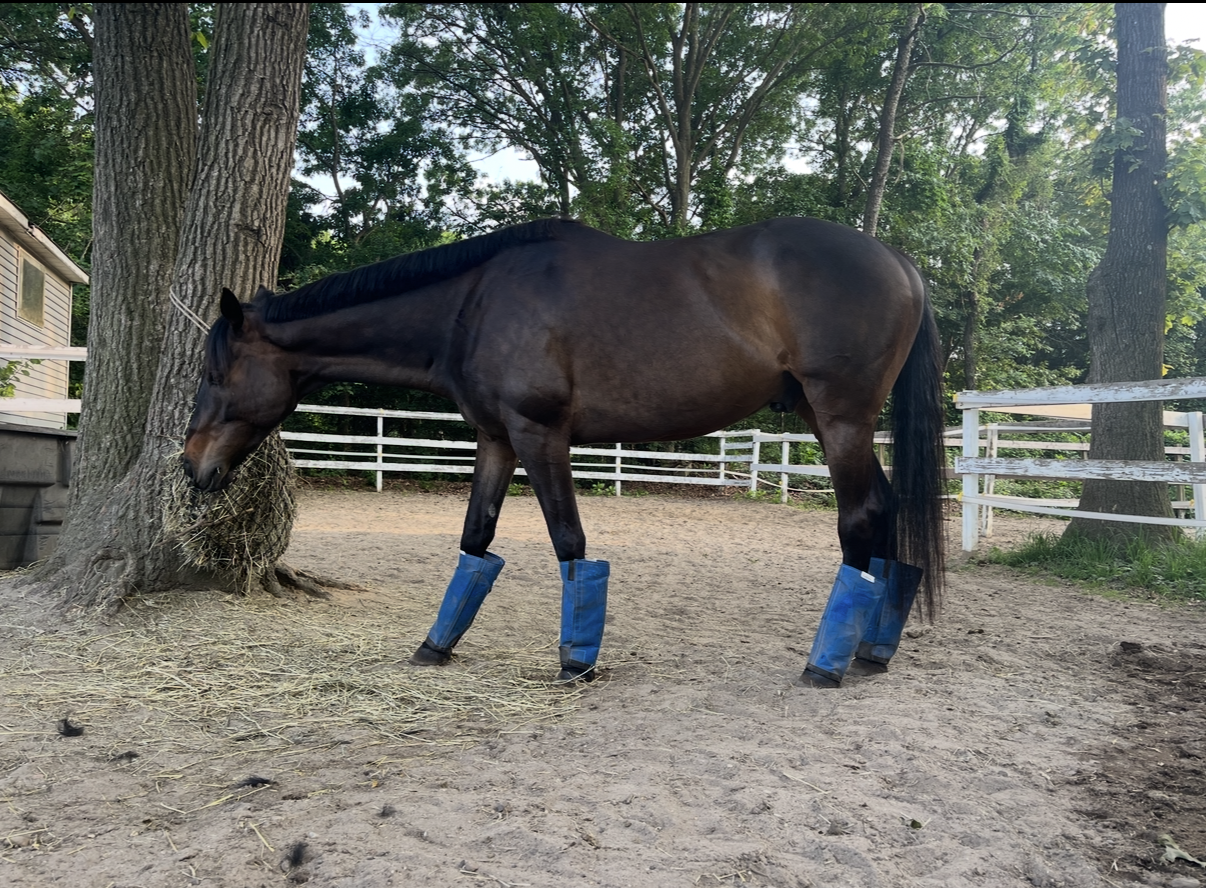
By 2023, Pilot had been completely grain-free for approximately six months.
His ration consisted of:
Alfalfa pellets
Soybean meal
Vermont Blend
Emcelle vitamin E
Free-choice hay
This is where my approach to feeding really started looking different.
Instead of asking: “What grain should I feed?”
I was asking: “What nutrients does this horse actually need?”
And that's a very different question.
Forage Became the Foundation
The biggest change wasn't a supplement.
It was free-choice hay.
Horses are designed to consume forage throughout the day, and forage should make up the foundation of the equine diet.
Instead of rationing the largest and arguably most important portion of his diet while trying to make up calories elsewhere, Pilot had consistent access to hay.
That alone changed the way I thought about the feed room.
Start with forage.
Then figure out what the forage isn't providing.
Alfalfa Stayed
Going grain-free didn't mean eliminating calories or protein.
Pilot continued receiving alfalfa pellets.
Alfalfa can be a useful source of quality protein, calories and calcium while still being a forage.
Rather than removing everything from his bucket, the goal became choosing ingredients for a reason.
Soybean Meal Was Added for Protein Quality
This is where understanding protein versus amino acids became important.
Crude protein percentage doesn't tell us the whole story.
Proteins are made from amino acids, and horses must receive certain essential amino acids through their diet. Lysine is particularly important when evaluating equine diets, with methionine and threonine also commonly considered.
Soybean meal is a concentrated source of high-quality protein with a useful amino acid profile.
I wasn't simply trying to make Pilot's crude protein number higher.
I wanted his diet to provide the building blocks necessary to maintain and develop tissue.
That's an important distinction.
Vitamins and Minerals Became Intentional
Vermont Blend remained part of his ration to provide concentrated vitamins and minerals without requiring several pounds of fortified grain.
Emcelle was used as a source of natural vitamin E.
Vitamin E deserves particular attention in horses without substantial access to fresh green pasture because vitamin E concentrations decline after forage is harvested and stored.
Instead of assuming his bucket needed to be large to be nutritionally complete, each component started having a specific job.
2026: Still Grain-Free
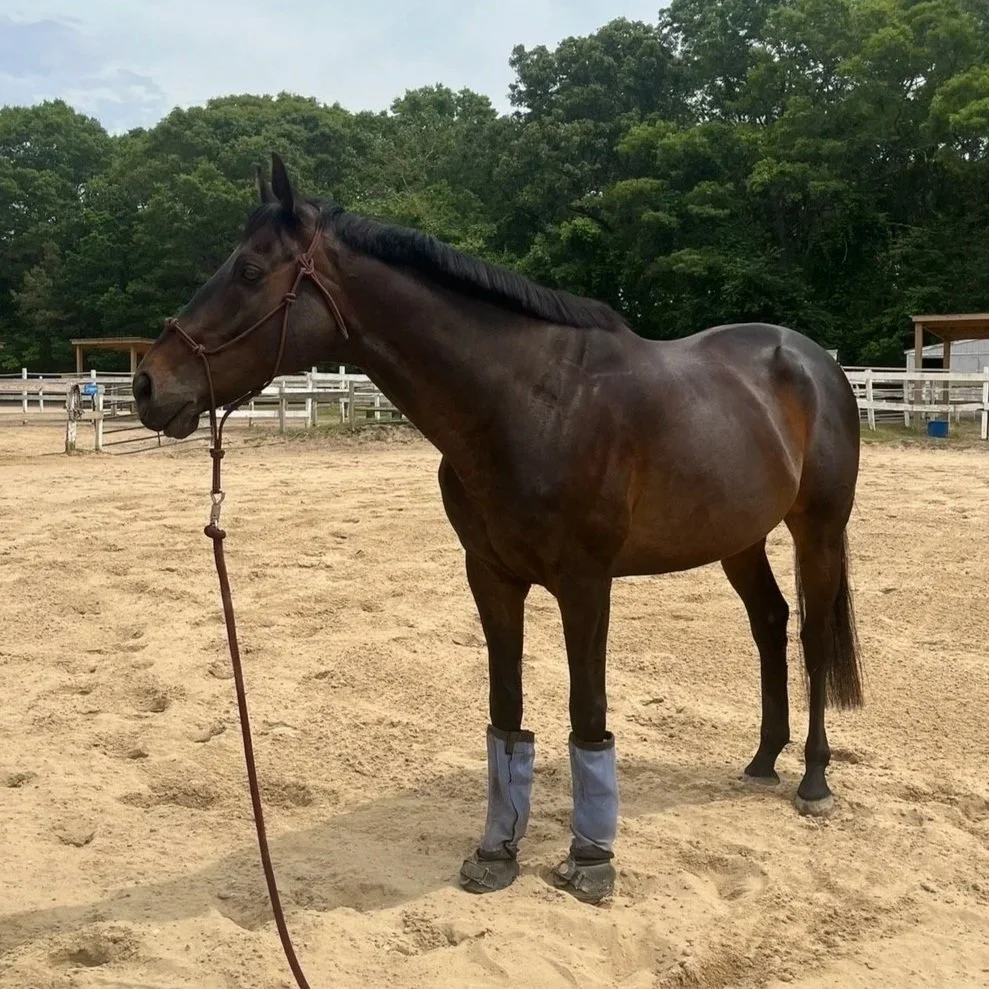
Fast-forward to the bottom photograph.
Pilot's current diet remains remarkably similar:
Alfalfa pellets
Soybean meal
Vermont Blend Mineral Balancer
Emcelle vitamin E
Plain table salt
Free-choice hay
No traditional grain.
And that's what I find most interesting about these photos.
Pilot’s transformation isn't the result of finding a magical weight-gain feed.
His bucket actually contains fewer types of feed than it did years ago.
What changed was my understanding of what I was trying to accomplish with it.
Does This Mean Grain Is Bad?
No. That's not the lesson here.
Commercial concentrates can be extremely useful, and plenty of horses do beautifully on them.
“Grain-free” isn't automatically healthier, either.
A poorly balanced grain-free diet is still a poorly balanced diet.
The point is that grain isn't a requirement simply because a horse needs calories, weight or muscle. Depending on the individual horse, forage and forage-based feeds, beet pulp, alfalfa, fats, quality protein sources, ration balancers and other ingredients can all play roles in building an appropriate ration.
For some horses, a commercial concentrate makes perfect sense.
For others, it may not be necessary.
And This Isn't Just a Diet Before-and-After
I think this distinction is important.
It would be easy to put Pilot's 2020 and 2026 photos next to each other and say:
“Look what this diet did.”
That's not something I can honestly claim.
Six years happened between those photographs.
His environment changed. His management changed. His hoof care changed. His movement and workload changed. His health has been monitored and addressed. And, simply, he aged.
Nutrition is one piece of that picture.
But it is a very important piece.
A diet provides the raw materials the body has available to maintain itself.
Exercise can stimulate muscle development, but the body still needs adequate energy, quality protein and amino acids to build that tissue.
Hooves grow continuously, but that new tissue must also be built from nutrients supplied by the diet.
Good nutrition doesn't guarantee a particular body or hoof.
It helps give the horse the resources to build what their genetics, health, environment and movement allow.
The Biggest Thing Pilot Taught Me
I used to look at the bucket first.
Now I look at the forage first.
I used to think about how much I was feeding.
Now I think about what the entire ration provides.
I used to see a horse that needed weight and immediately think about adding grain.
Now I'd rather ask why the horse needs weight, whether they're consuming enough forage, whether their energy requirements are being met, what their protein and amino acid intake looks like, and whether the overall ration is balanced.
That's probably the biggest difference between feeding Pilot in 2020 and feeding him in 2026.
It isn't that I discovered one perfect product.
I learned to stop feeding products and start feeding nutrients.
You Don't Have to Feed Like Me
Pilot's ration is designed for Pilot.
Your horse may need something completely different.
A senior horse with poor dentition, an easy keeper on restricted forage, an insulin-dysregulated horse, a growing horse, and an upper-level performance horse shouldn't automatically be eating the same thing.
That's why I don't think the takeaway from any feeding post should be:
“Buy what I buy.”
Instead, learn to ask better questions.
What is my horse getting from forage?
Are their calorie needs being met?
Are they receiving adequate quality protein and essential amino acids?
Is the vitamin and mineral portion of the ration balanced?
Do they have access to fresh pasture, or do nutrients such as vitamin E need additional consideration?
What am I adding to the bucket—and why?
Because sometimes improving a horse's diet doesn't mean adding more.
Sometimes it means understanding what was missing in the first place.
Want to Know What Your Horse's Diet Is Actually Providing?
If you're looking at your horse's feed bucket and wondering where to even begin, Mad Barn offers a free equine diet analysis.
You can submit your horse's current forage, feeds, supplements, workload and other information, and their equine nutrition team can evaluate the overall ration and help identify potential gaps, excesses, or areas worth adjusting.
It's a great starting point if you want to move beyond choosing feeds based on the front of the bag and start looking at what the entire diet is actually providing.