
Booting For Beginners
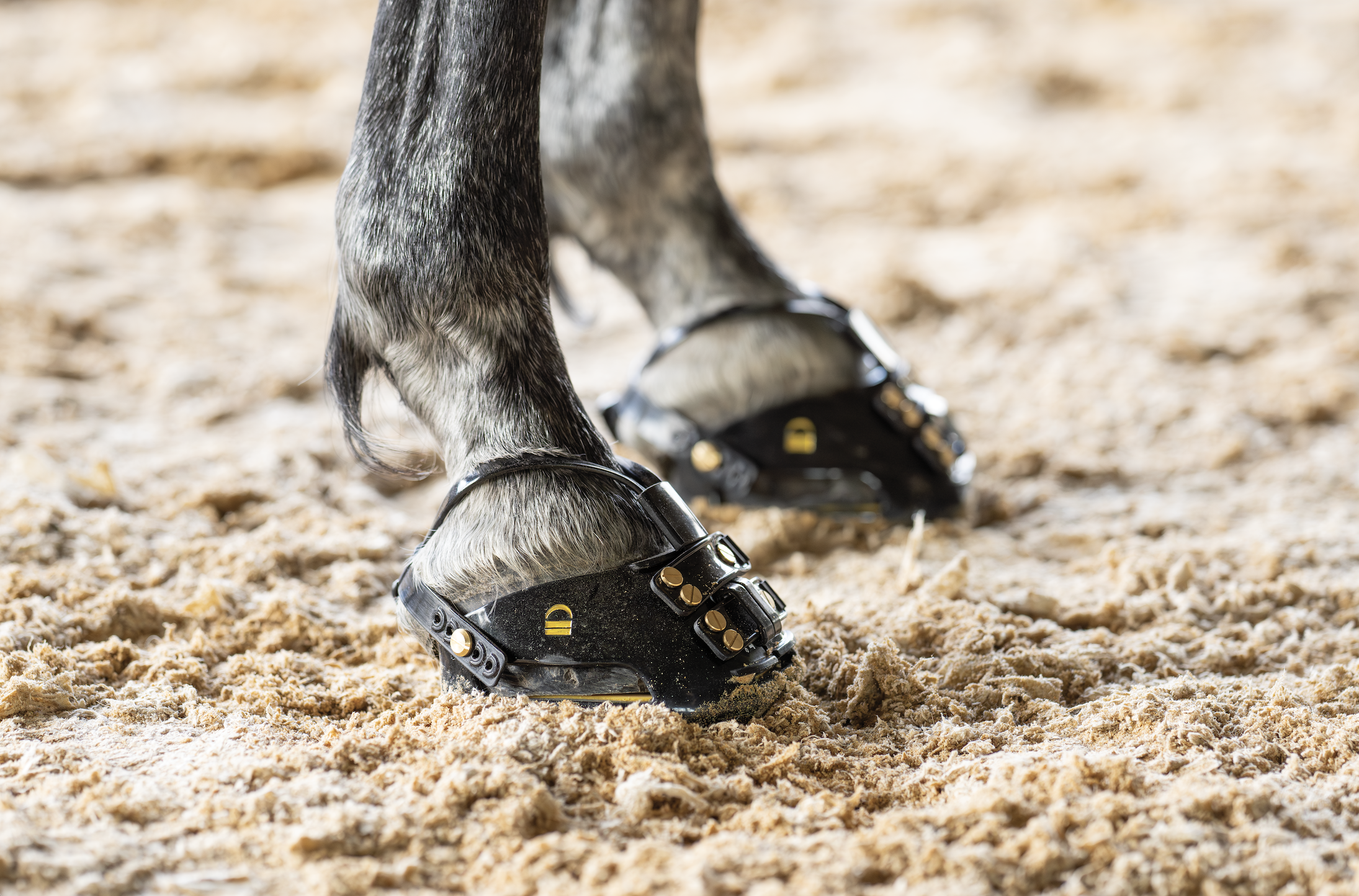
Hoof boots are often treated like a solution for a barefoot horse that's already sore, but they're much more useful than that.
A horse doesn't need to be uncomfortable to benefit from boots. Boots can be used proactively for riding, conditioning, trail work and performance to provide protection and a more predictable landing surface as terrain and workload change.
A horse who spends most of the day on grass, arena footing or relatively soft ground may be completely comfortable barefoot at home but not conditioned to travel several miles over gravel, rocks or hard-packed trails. We don't need to wait until that horse becomes footsore to offer protection.
The goal isn't to prove how much terrain a horse can tolerate barefoot. It's to keep them comfortable, confident and moving well while still maintaining the benefits of a barefoot hoof.
What Does a Hoof Boot Actually Do?
A hoof boot creates a protective layer between the hoof and the ground.
That sounds simple, but there's more to it than just covering the bottom of the foot.
Barefoot horses receive a tremendous amount of information from the ground beneath them. The hoof loads and unloads with every stride, and the horse constantly adjusts to changes in terrain.
A well-fitted boot doesn't eliminate that.
Instead, it gives the horse a more consistent surface to interact with. Gravel, rocks, hard-packed ground and changing terrain are still underneath them, but the hoof is landing onto the boot rather than directly onto every individual irregularity in the ground.
The hoof can still function dynamically within the boot. The hoof capsule can load and unload, and the frog, sole, bars and hoof wall can continue to participate in supporting the horse.
We're adding protection without asking the hoof to stop being a hoof.

Comfort Is a Part of Performance
Protection isn't only about preventing obvious soreness.
A horse doesn't have to be visibly lame before the footing underneath them starts influencing how they move.
A horse that's uncomfortable or uncertain about the terrain may shorten their stride, hesitate, pick their way across a surface or alter how they land. Sometimes those changes are obvious. Sometimes they're subtle. A predictable, comfortable landing surface can allow the horse to move more confidently instead of modifying every step around the terrain underneath them.
That's why hoof boots aren't just a rehabilitation or transition tool.
Boots can be performance equipment.
For the right horse in the right boot, they can provide protection and consistency while allowing the horse to retain the benefits of being barefoot the rest of the time.
Who Might Benefit From Boots?
Hoof boots can be useful for horses who:
are transitioning out of shoes
are comfortable barefoot but working over terrain they aren't conditioned to
trail ride over rocks, gravel or hard-packed surfaces
are increasing their workload or mileage
condition or compete over varied terrain
have thin or sensitive soles
are rebuilding healthier hoof structures
wear their feet faster than they grow them during certain times of year
need additional protection during rehabilitation
simply move more confidently with protection for a particular activity
Some horses wear boots temporarily. Some use them only for trail rides. Some use them for conditioning or competition. Others may use them more consistently while their feet develop.
There isn't a prize for using the least amount of hoof protection possible.
The goal is a healthy, functional hoof and a horse that's comfortable doing the job we're asking them to do.
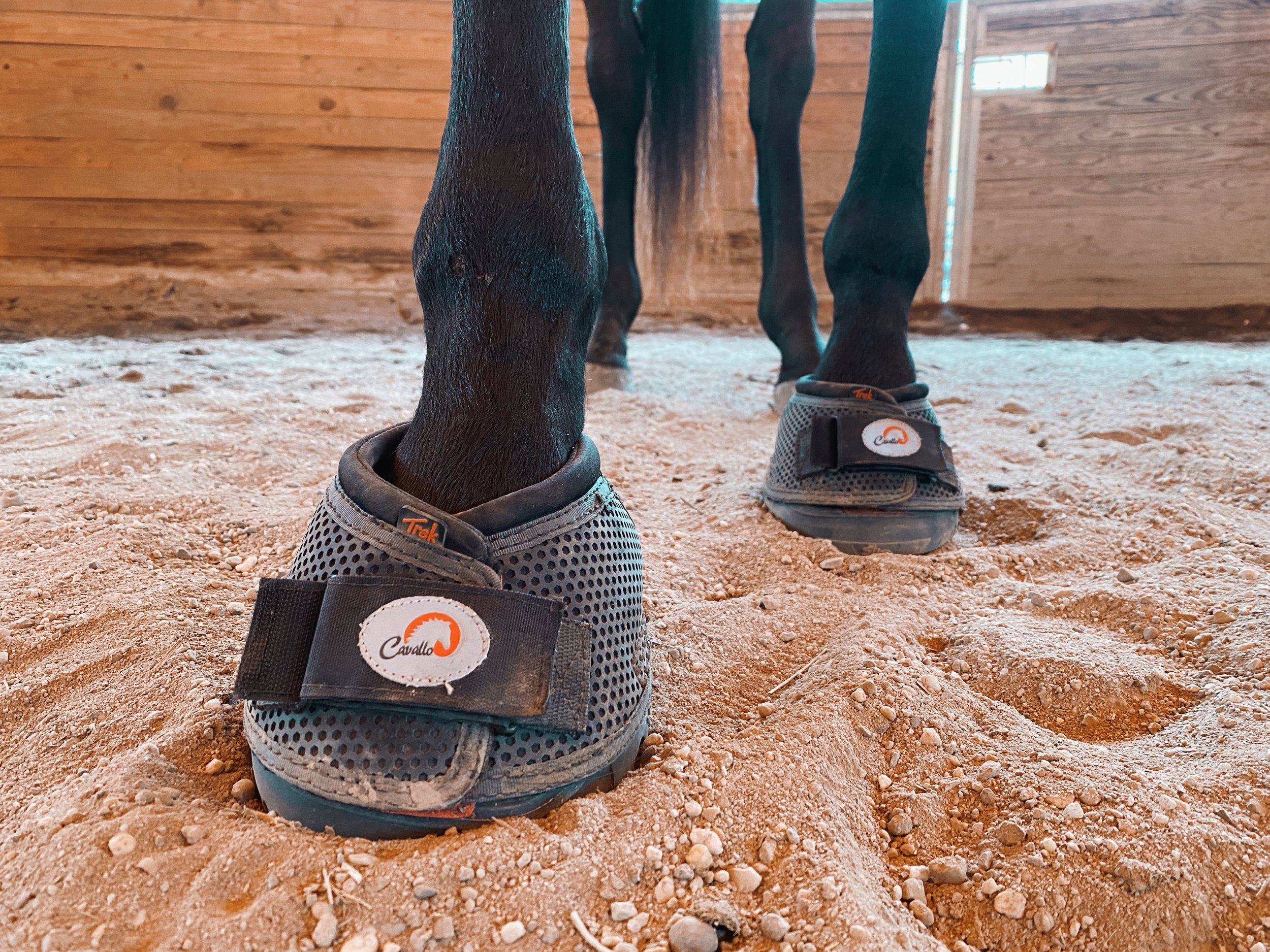
Have questions about hoof boots or think your horse could benefit from a pair?